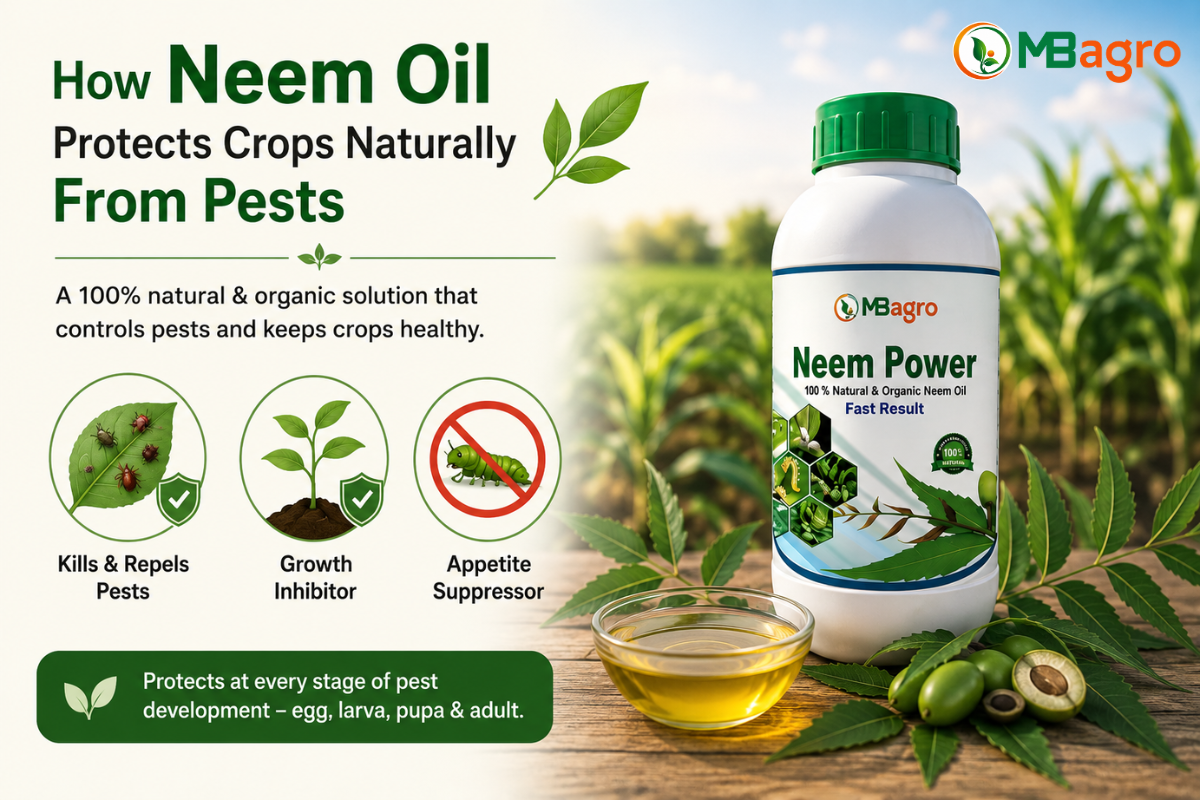
Neem oil is one of the most effective and eco-friendly organic solutions used in modern agriculture for natural pest control. Extracted from the seeds of the neem tree, neem oil has been used for centuries in farming because of its powerful insect-repelling and plant-protecting properties. Today, farmers and gardeners widely use neem oil to protect crops from harmful pests without damaging the environment or affecting crop quality.
One of the main reasons neem oil is popular in sustainable farming is its natural insecticidal properties. Neem oil contains an active compound called azadirachtin, which acts as a natural pest repellent and growth regulator. This compound affects the feeding, breeding, and life cycle of insects, gradually controlling pest populations without harming plants. Unlike chemical pesticides, neem oil does not instantly kill insects through toxic chemicals but disrupts their development naturally.
Neem oil is highly effective against a wide range of crop pests. It helps control aphids, whiteflies, mealybugs, spider mites, caterpillars, leaf miners, thrips, and many other harmful insects. When sprayed on plants, neem oil forms a protective layer that discourages insects from feeding on leaves, stems, and fruits. It also prevents eggs from hatching and reduces the growth of larvae, helping farmers manage infestations effectively.
Another important benefit of neem oil is its safety for plants and beneficial organisms. Chemical pesticides often harm pollinators, beneficial insects, and soil microorganisms, leading to environmental imbalance. Neem oil, when used properly, is much safer for bees, butterflies, earthworms, and natural predators. This makes it an excellent choice for organic farming and environmentally responsible agriculture.
Neem oil also helps protect crops from fungal diseases. It works as a natural fungicide against issues like powdery mildew, rust, black spot, and leaf spot diseases. Regular application keeps plant leaves healthy and reduces the spread of fungal infections in farms and gardens. This dual action as both insecticide and fungicide makes neem oil a highly versatile agricultural product.
One of the biggest advantages of neem oil is that pests do not easily develop resistance to it. Many chemical pesticides become ineffective over time because insects adapt to them. Neem oil works differently by affecting multiple biological processes in pests, making resistance development much slower. This helps farmers maintain long-term pest control without constantly changing products.
Neem oil is also biodegradable and environmentally friendly. It breaks down naturally in the environment and does not leave harmful chemical residues in the soil or water. Crops treated with neem oil are considered safer for human consumption compared to those heavily sprayed with synthetic pesticides. As consumer demand for chemical-free food increases, neem oil supports healthier and more sustainable farming practices.
Using neem oil is simple and cost-effective. Farmers can mix neem oil with water and spray it directly onto crops during early morning or evening hours. Regular preventive spraying helps maintain healthy crops and reduces pest outbreaks naturally.
In conclusion, neem oil is a powerful natural solution for protecting crops from pests and diseases. It supports sustainable agriculture by improving plant health, reducing chemical pesticide use, and protecting the environment. With its natural insecticidal, antifungal, and eco-friendly properties, neem oil continues to be an essential product for modern organic farming.